Funky Time Casino Game: Rules, Strategies, RTP & Bonus Rounds
Watch Funky Time Live
Best Online Casinos to Play Funky Time

1Win
500% Deposit Bonus
RTP: 98%
Games: 11,000+

PIN-UP
120% Bonus + 250 FS
RTP: 97%
Games: 6000+
Funky Time is a high-energy live game show from Evolution, launched as a 2023 release and widely seen as a spiritual successor to Crazy Time. Instead of reel-spins or card decisions, you’re betting on outcomes from a giant digital money wheel called the DigiWheel, where huge multipliers and show-style bonus rounds drive the action.
The core mechanic is simple: the DigiWheel has 64 segments featuring numbered payouts, random multiplier events, and four bonus games, so the experience is built around spectacle and swingy results (think 2x–50x multiplier bursts and headline moments like a 10,000x multiplier). With 20-second betting windows and a lively host, it plays more like a TV set than a traditional casino table. Because outcomes come from wheel physics and RNG-driven features rather than player choices, there’s little “strategy” in the classic sense—your edge comes from managing stakes and picking which bet spots you’re comfortable sweating.
Useful Information
| Category | Information |
| Game Name | Funky Time |
| Provider | Evolution Gaming |
| Game Type | Live Casino Game |
| Release Date | 2023 |
| RTP | 95.99% |
| Maximum Payout | $500,000 |
| Number of Segments | 64 |
| Bonus Rounds | Bar Bonus, Stayin' Alive Bonus, Disco Bonus, VIP Disco Bonus |
| Random Multipliers | Up to 50x |
| Platforms | Desktop, Mobile (iOS & Android), Tablet |
| Languages Supported | Multiple (including English, Spanish, German, French, etc.) |
| Availability | 24/7 |
| Minimum Bet | Varies by casino |
| Maximum Bet | Varies by casino |
| Key Features | Interactive bonus rounds, Digiwheel technology, multiple camera angles |
| Live Chat | Yes |
| Auto Play | Yes |
Key Facts at a Glance
Funky Time is a live dealer wheel game where you place fixed bets and watch a host spin the DigiWheel and trigger multipliers or bonus rounds. The numbers below are the practical specs most players check before staking real money, especially if you’re comparing it to other Evolution titles like Dream Catcher or Deal or No Deal Live. Limits can vary slightly by casino and currency, but the ranges are typically consistent across regulated lobbies. Always set a budget and use support resources such as BeGambleAware.org if play stops feeling fun.
- Game type: Live game show (wheel-based)
- Provider: Evolution
- RTP: 95.99% (overall)
- Volatility: Medium volatility (big swings mainly come from multiplier/bonus hits)
- Release date: Q2 2023
- Betting layout: Up to 17 betting options depending on the table configuration
- Stake range: min stake around €0.10; maximum commonly up to €10,000
- Max theoretical win: up to €100,000,000.00 (with typical operator caps; many rooms reference a $500,000 maximum payout limit)
- Platforms: Desktop and mobile with HD stream
How Funky Time Differs From Classic Online Slots
If you’re coming from slots like Book of Dead or branded titles such as Jumanji, Funky Time will feel instantly different because it’s hosted and communal. You’re not spinning your own five-reel grid hunting Expanding Wilds or lining up paylines; you’re watching a live dealer/host run a shared round where everyone bets before the same outcome lands. The centerpiece is a money wheel (the DigiWheel), not reels—so pacing is closer to a studio game show than a solo slot session.
Betting is also structured differently: instead of choosing coin size and hitting spin, you place chips on fixed outcomes that can include even-money style results (some bets behave like a 1:1 payout) and higher-risk segments designed to trigger bonuses. Bonus rounds don’t arrive via scatter symbols; they’re activated when the wheel stops on specific bonus segments (for example, show features that may involve collecting F U N K letters or branded events such as the Disco bonus or Bar bonus). In short, slots are about personal spin volume and symbol math, while Funky Time is about timing your bankroll across shared spins and riding the multiplier/bonus volatility when it finally connects.
Inside the Funky Time Money Wheel
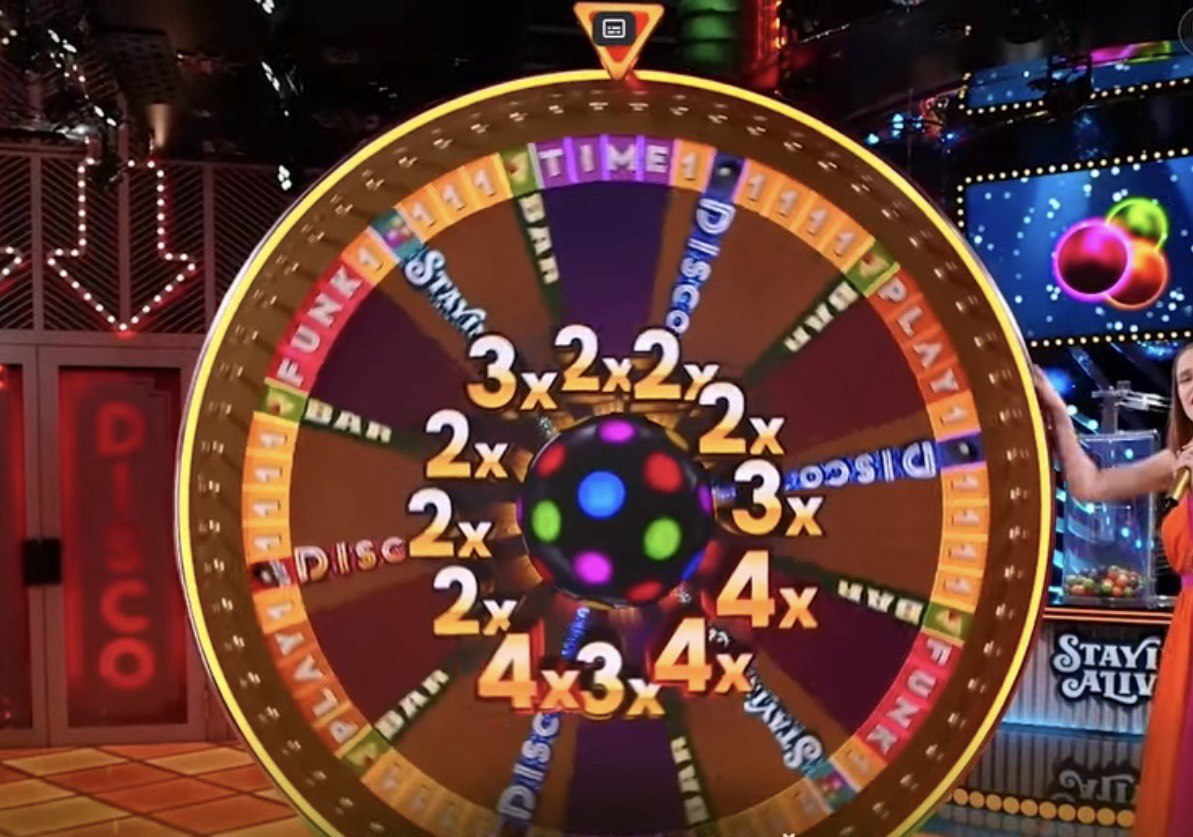
The heart of Funky Time is Evolution’s DigiWheel: a giant digital money wheel with 64 segments that determines every main-game result. You’ll mainly land on Number 1, letter segments that spell FUNK / PLAY / TIME, or one of the 12 bonus segments (Bar, Disco, Stayin’ Alive, VIP Disco), with random multipliers 2x–50x assigned to specific segments before each spin.
Mechanically, the round cadence is simple: you place bets during the 20-second betting window, the wheel highlights which segments receive multipliers, and then the host spins. That’s why this title feels closer to Crazy Time than a reel slot like Book of Dead: your outcomes are dictated by a shared wheel and multiplier map rather than paylines or Expanding Wilds.
Segment Distribution and Base Payouts
The DigiWheel’s 64 segments are intentionally weighted toward frequent small hits, with rarer entries reserved for letters and bonus triggers. In the base game, the counts and payouts below describe what you get before any wheel multipliers (and before any bonus-round multiplier mechanics). This “base” view matters because your expected swing comes from how often each segment appears, not just the headline features.
- 28 x Number 1: pays a 1:1 payout (even money) when it hits.
- 24 letter segments: letters covering the sets that spell PLAY, F U N K, and TIME; each letter pays 25:1 as a base return.
- 12 bonus total: Bar bonus (6), Disco bonus (3), Stayin’ Alive (2), VIP Disco (1), each triggering its own feature with variable outcomes.
So, while Number 1 lands often due to its 28 segments, letters and bonuses are the higher-variance parts of the wheel. You’re not picking from 17 betting options and “solving” anything like a table game; you’re choosing which weighted outcomes to back and how much bankroll to allocate to the rarer segments.
Random Multipliers and How They Boost Wins
Before each spin, the DigiWheel assigns random multipliers in the 2x–50x range to selected segments, and those multipliers apply only for that round. If your chosen segment is marked and the wheel lands on it, your win equals the segment’s base payout multiplied by the wheel multiplier.
- You place your bets during the betting window.
- The game randomly “tags” certain segments with multipliers (for example, 5x on a letter, 20x on Number 1, etc.).
- The wheel spins; if it stops on a tagged segment you backed, the multiplier boosts your return.
Simple example: a letter has a base payout of 25:1. If that letter is tagged with a 10x wheel multiplier and it hits, the effective return becomes 25 x 10 = 250:1.
For bonus segments, the order matters: the bonus feature first determines its own result/multiplier, and then the wheel’s multiplier is applied after the bonus outcome is calculated. That “stacking” is how bonus rounds can produce the biggest moments, sometimes reaching headline ceilings such as a 10,000x multiplier depending on the feature outcome and the wheel tag.
Quick Bet Options: 12 Letters and 4 Bonuses
Evolution includes two shortcut buttons that place multiple bets in one click: BET ON 12 LETTERS and BET ON 4 BONUSES. They’re designed to make coverage easy when you don’t want to manually click every letter or each bonus segment one-by-one.
BET ON 12 LETTERS spreads your chosen chip value across all letter bets (covering the F U N K / PLAY / TIME letters at once), while BET ON 4 BONUSES covers Bar, Disco, Stayin’ Alive, and VIP Disco simultaneously. The trade-off is bankroll impact: because you’re placing several wagers at once, your total stake per round rises quickly—useful for convenience, but it can accelerate losses if you’re not sizing bets carefully.
How to Play the Funky Time Casino Game Step by Step
To play Funky Time, you join a live table, pick a chip value, place bets on Number 1, letters, or bonus segments during the 20-second betting time, then watch the live dealer/host spin the DigiWheel and settle wins (including any 2x–50x multiplier boosts). Everyone can watch every bonus round, but only players who bet on that bonus segment actually participate for payouts.
Funky Time is a live casino game created by Evolution Gaming that blends luck with engaging bonus rounds. In this game players interact with a high tech wheel known as the Digiwheel split into 64 sections. Each section offers results such, as numbers, letters and special bonus rounds. Lets go over the guidelines.
1. Game Setup
- A real host spins the wheel.
- The wheel has 64 sections, with numbers, letters and bonus game sections.
- Before each game starts players bet on which sections they think the wheel will land on.
2. Betting Options
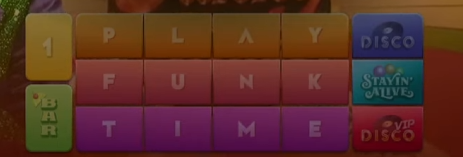
Players have the option to wager on categories; numbers (1) alphabets forming "FUNKY TIME " and special game sections, like Bar Bonus, Stayin' Alive Bonus, Disco Bonus and VIP Disco Bonus.
3. Segments Explained
Number Segments:
- 1 is 28 segments, pays 1:1.
Letter Segments:
- 24 segments spell out "FUNKY TIME" and pay 25:1.
Bonus Game Segments:
- Bar Bonus: You'll unlock the Bar Bonus round with 4 segments.
- Stayin' Alive Bonus: Dive into the Stayin' Alive Bonus round with 2 segments.
- Disco Bonus: Get ready for the Disco Bonus round when you hit 4 segments.
- VIP Disco Bonus: Unlock the VIP Disco Bonus round, with 2 segments.
4. Payouts
- When you bet on a number segment you win based on its worth (for example betting on 1 pays out at a 1:1 ratio).
- Betting on letter segments rewards you with a payout of 25 times your bet.
- Triggering bonus game segments leads to engaging bonus rounds.
5. Bonus Rounds
- Bar Bonus: Players can choose from three glasses, each assigned with multipliers ranging from 2x, to 20x. As the slot reel spins an additional multiplier is added to one of the glasses thereby increasing the prize amount.

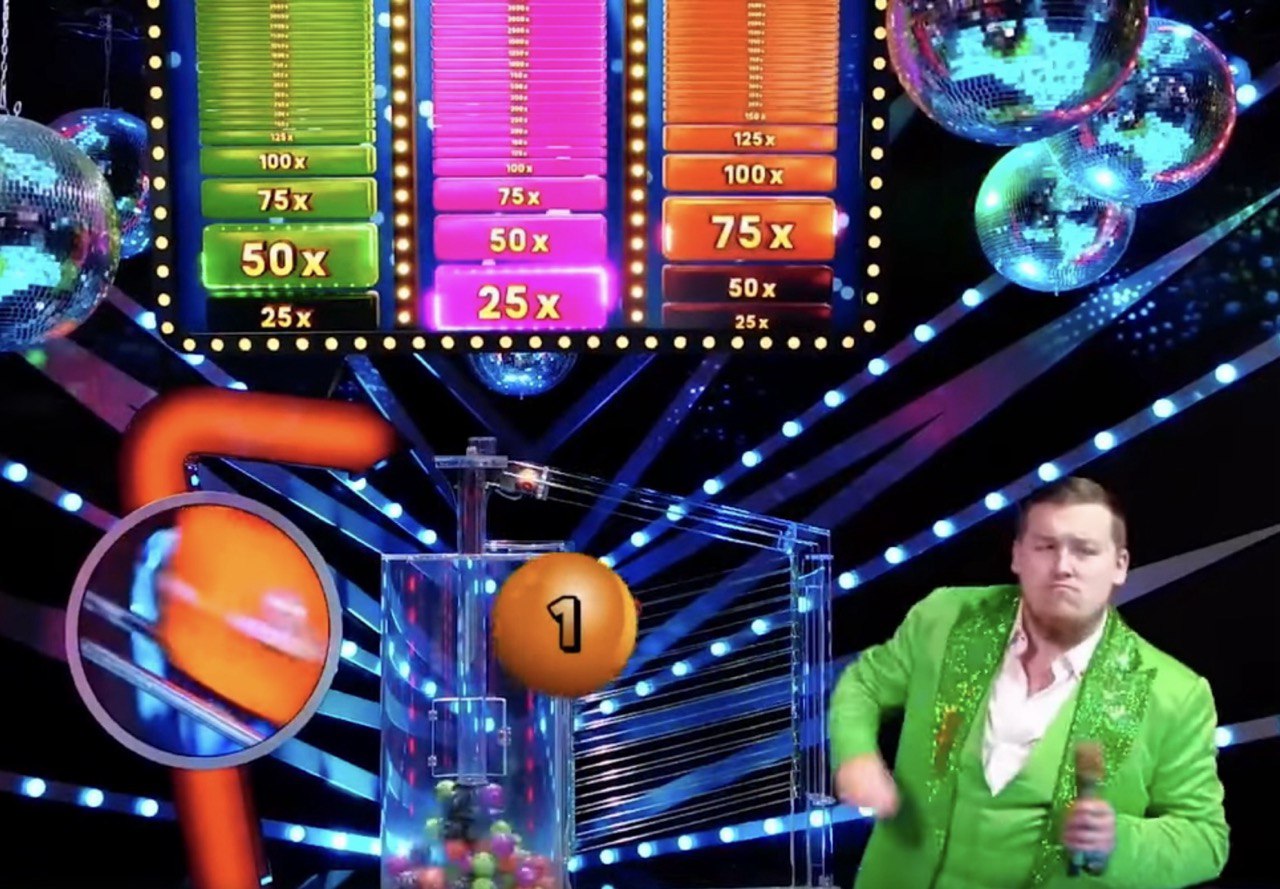
- Stayin' Alive Bonus: Players can select from three ladders. Green, Purple or Orange. Each ladder consists of 20 levels that offer escalating multipliers reaching up to 10,000 times the value. Progression on the ladder is determined by a bingo machine drawing balls, where black balls lead to a decrease, in lives.
- Disco Bonus: Mr. Groovy moves gracefully on a dance floor that can be either 3x3 or 7x7 in size at the VIP Disco picking up multipliers along the way. The round comes to a close when Mr. Groovy steps off the dance floor.
- VIP Disco Bonus: Similar to Disco Bonus but with higher multipliers and a larger dance floor.

6. Random Multipliers
Random multipliers up to 50x can appear on segments, increasing potential payouts.
7. How to Play
- Gamers place their bets on the sections where they think the wheel will come to a halt.
- The presenter gives the wheel a spin. The result is settled once the wheel ceases its movement.
- Should a players wager align, with the result they receive their winnings based on the payout schedule.
8. Auto Play
Players can use the Auto Play feature to repeat their bets for a set number of spins.
| Round Phase | What you do | What the game does |
|---|---|---|
| Betting (20 seconds) | Select one or more bet spots and confirm stake | Locks bets when the timer ends |
| Multiplier assignment | Check which segments you covered got tagged | Applies random 2x–50x multiplier tags to segments |
| Spin & settlement | Watch the spin and track your chosen spots | Resolves base payout and then applies any wheel/bonus rules |
Bet Types and Minimum / Maximum Stakes
Your bets in Funky Time are fixed-position wagers on the wheel rather than lines or reels like Book of Dead (so no scatter chasing or Expanding Wilds). The simplest bet is Number 1 (even money), while letters and bonus segments aim for bigger returns and bigger swings. Most tables allow you to combine several bets in one round, which can make hits feel more frequent but also increases what you spend per spin.
Typical limits are a min stake around €0.10 and a max stake up to about €10,000 per round, though the exact cap depends on the casino and currency. For example, placing €0.50 on Number 1 and €0.10 on two letters is still small per click, but your total round cost becomes €0.70 because you’re staking three separate spots.
- Number 1: base 1:1 payout when it hits.
- Individual letters: bet on specific letters (including the F U N K set) for higher base returns that can be boosted by multipliers.
- Bonus segments: bet directly on Bar, Disco, Stayin’ Alive, or VIP Disco to qualify for those features.
- Bulk bets (if shown on your table): one-tap options that cover multiple letter bets or all bonus bets at once.
If you’re tempted to “chase” with a Funky Martingale, remember that a run of misses can make stakes balloon fast—set a hard stop-loss, and use responsible-gaming tools (including support at BeGambleAware.org) if you’re struggling to keep play controlled.
Mobile and Live Streaming Experience
Funky Time is streamed from an Evolution studio via a real-time live stream, and you can play the same table on desktop, mobile/tablet support, and most modern browsers. The presentation is built for show: a crisp HD stream, an always-visible betting layout, and clear prompts for when bets open/close and when multipliers are assigned.
On smaller screens, the interface typically collapses into swipeable panels: the betting grid stays tappable, your active bets and total stake are summarized, and chat sits behind a toggle. Bonus rounds are fully viewable on mobile as well—so even if you didn’t bet the triggering segment, you’ll still see the feature play out; you just won’t be eligible for any payout. Smoothness depends mostly on your connection and the casino’s player, but the core flow (timer, tags, spin, settlement) remains consistent.
Funky Time Bonus Games Explained
The biggest swings in Funky Time come from its four bonus games, because each feature has guaranteed multipliers baked into the mechanics rather than relying only on the base wheel outcomes. When the DigiWheel lands on a bonus segment, the main-game spin pauses and the live show pivots into a themed mini-game where multipliers can stack on top of any 2x–50x multiplier applied to the triggering segment.
The four bonuses are Bar, Stayin’ Alive, Disco, and VIP Disco, all wrapped in a disco-era vibe (dance floors, neon, and a cheeky bar setting) and streamed in crisp HD stream from Evolution’s studio. Compared to the more common hits like Number 1 (a 1:1 payout) or letter bets (including the F U N K letters), bonus triggers are intentionally rarer—so they’re where most of the volatility and headline outcomes live.
Bar Bonus: Pick a Glass for Juicy Multipliers
The Bar bonus is a pick-and-reveal feature where you choose one of three glasses and chase a boosted multiplier outcome. The scene plays out at a retro bar with a robot bartender, keeping the pace quick while still giving you one meaningful choice at the start.
Here’s how it works: you pick one of the three empty glasses, then the robot bartender “pours” random multipliers into all three glasses. After that, a single-reel slot spins to generate an extra multiplier, which is assigned to one of the glasses by multiplying its poured value (creating one clearly superior glass for that round). Your payout is based on the final multiplier in the glass you selected.
If the wheel segment that triggered Bar had a multiplier attached, that wheel multiplier is applied after the Bar game finishes—so it effectively scales the Bar result rather than replacing it. That stacking is why Bar can feel deceptively explosive even though the feature is straightforward.
Stayin’ Alive Bonus: Climb the 10,000x Ladder
Stayin’ Alive is a survival-style bonus built around a 90-ball machine and a 20 levels multiplier ladder that can climb as high as 10,000x. You start with 4 lives, and the round ends when those lives are gone—locking in whatever ladder level you’ve reached.
At the beginning, you choose a color group (commonly shown as green, pink/purple, or orange). Balls are then drawn from the 90-ball set: if the ball matches your chosen color, it advances you up the ladder by either 1-step ball or 2-step ball movement (one level or two levels). The ladder begins at 5x and increases as you climb, so the difference between a run of 1-step advances and a couple of timely 2-step jumps is huge.
Danger comes from black STOP balls: each STOP ball removes one life, and when your lives hit zero the feature ends immediately. Your payout equals your current ladder multiplier, and if the bonus was triggered with a wheel tag, that wheel multiplier is then applied on top—one route to rare, headline peaks like a 10,000x multiplier.
Disco Bonus: Dance Across a 37-Tile Floor
The Disco bonus is a grid-based feature where the Mr. Funky character moves across a 37-space grid dance floor collecting multipliers until the round ends. It’s volatile because you can either build a decent chain of collected tiles or crash out quickly.
Each tile on the dance floor holds a multiplier; when Mr. Funky steps onto a tile, that multiplier is collected into your total. Movement is determined by record spins/directional indicators, so you’re reacting to where the feature sends you rather than choosing each step. The board also includes X tiles upgrading multipliers, which can increase the value of random multiplier tiles on the floor and raise the ceiling of what you can collect in the remaining moves.
The danger tiles are pits ending the feature: if Mr. Funky falls into one, the round stops and you’re paid whatever you’ve accumulated. In standard Disco, typical tile values can climb up to around 100x, and then any triggering wheel multiplier scales the final result after the feature total is calculated.
VIP Disco: High-Stakes Dance With 10,000x Potential
VIP Disco is the rarest and highest-ceiling bonus: it has only 1 VIP segment on wheel and can theoretically reach a 10,000x max outcome. It mirrors Disco’s movement-and-collection gameplay but raises both the board size and the available multipliers, making it extremely high variance.
In VIP Disco, the dance floor expands to 63 tiles (a 63-space grid), giving Mr. Funky more room to roam and more multiplier tiles to potentially collect. The big difference is value: multipliers can be boosted up to 500x per tile, so one strong path can dwarf what standard Disco typically delivers. The same “good” tiles (including upgrade mechanics) and “bad” tiles (pits that can end the round) keep the tension high throughout.
Because VIP Disco appears on just one of the wheel’s 64 segments, it’s extremely rare—often cited at roughly ~1.56% per spin for that specific segment before considering any bet coverage. When it does hit, the feature result is calculated first and then any triggering wheel multiplier is applied afterward, which is why bankroll discipline matters as much here as anywhere else (and why support like BeGambleAware.org exists for players who need it).
Funky Time RTP, Volatility and Hit Frequency
Funky Time’s published overall return sits at about 95.99% RTP, which puts it in line with many modern Evolution live game shows rather than ultra-tight traditional table games. The game is generally described as medium volatility, but you should expect occasional high-volatility spikes when bonus rounds land—especially VIP Disco and Stayin’ Alive, where multipliers can stack into four-figure territory.
RTP can vary slightly by bet type (for example, backing Number 1 versus letter bets like the F U N K letters or bonus segments), but the figures are typically clustered around the same headline RTP rather than being wildly different. In practical terms, hit frequency feels “busy” because the wheel contains many low-to-mid outcomes: you’ll see frequent small wins on 1:1 payout results and occasional letter hits, while bonus triggers are rarer and tend to define your session’s biggest upswings or downswings. Compared with slots like Book of Dead, the rhythm is more consistent (shared spins, fixed timing), but the bonus variance can still resemble a high-volatility slot when a 2x–50x multiplier lands on a bonus segment.
How Funky Time’s Numbers Compare to Crazy Time
Funky Time and Crazy Time are close cousins: both are wheel-based live game shows with four bonuses designed around multiplier-driven payoffs. The key difference is the hardware and how volatility is delivered—Crazy Time uses a classic, fully physical wheel plus the Top Slot, while Funky Time runs a 64 segments DigiWheel that can tag outcomes with on-wheel multipliers.
That design change affects your risk profile. In Crazy Time, the Top Slot adds a second-stage multiplier/feature layer; in Funky Time, the DigiWheel multipliers (randomly assigned each round) can boost “everyday” outcomes like Number 1 or letters, and they can also amplify bonuses after the feature resolves. Funky Time also offers more ways to bet—commonly referenced as 17 bet options—including individual letters and grouped shortcuts, which can spread your stake across outcomes in a way Crazy Time’s simpler layout doesn’t.
RTP-wise, both games tend to sit in a similar mid-95% band depending on the bet, so neither is “mathematically soft” like a low-house-edge live table game. The bigger practical difference is feel: Funky Time’s letter payouts and frequent multiplier tags can create more mid-sized peaks between bonuses, but the truly dramatic swings still come when a rare bonus (especially VIP Disco on the 63-space grid variant) collides with a strong wheel multiplier.
House Edge and Theoretical Maximum Win
A 95.99% RTP translates to a long-run house edge of about 4% (roughly 4.01%). That doesn’t mean you “lose 4% every session”; it means that across an extremely large number of spins, the expected average return trends toward that figure, with short-term results dominated by variance.
The variance is amplified by bonuses like Stayin’ Alive (built on a 90-ball machine with 1-step ball/2-step ball movement) and by VIP Disco, where stacked outcomes can reach a 10,000x headline. You’ll also see published maximum-win figures quoted as high as €100,000,000.00 in theoretical terms, but real-world cashouts are often limited by operator rules—many casinos cap single-round payouts around $500,000 (or a site-specific maximum). If you’re playing for entertainment, treat those ceilings as outliers and manage stakes accordingly; if gambling stops being controlled, tools and support such as BeGambleAware.org are the right next step.
Practical Funky Time Strategies That Actually Help
The only “strategy” in Funky Time is about bankroll management and choosing bets that match your risk vs reward comfort level, not about outsmarting the wheel. The DigiWheel’s outcomes and 2x–50x multiplier assignments are outside your control, so there’s no guaranteed winning system—but you can absolutely control how long you last, how wild your swings get, and whether you’re still enjoying it after an hour of fast spins.
Strategy frameworks you’ll see repeated across serious breakdowns (including Casinos.com-style approaches and MrQ-style play patterns) are basically: avoid emotional staking, keep bonus exposure proportional, and treat the game’s pace (20-second betting rounds) as a hidden risk factor. If you like the show, build a plan that keeps you in the seat without relying on a miracle 10,000x multiplier to bail out a bad session.
| Approach | Main bets | Bonus exposure | What it’s best for |
|---|---|---|---|
| Steady | Mostly Number 1 (1:1) + a few letters | Low | Longer playtime, smaller swings |
| Balanced | Mix of 1 + several letter bets | Small, consistent | Regular engagement with occasional spikes |
| High-variance | More letters + heavier bonus focus | Medium to high | Chasing big feature moments (higher bust risk) |
Bet by Segment Frequency, Not Emotion
Rational staking in Funky Time means sizing bets according to how often segments exist on the wheel, not how exciting the last spin felt. The DigiWheel has 28 x 1 segments, 24 letters, and only 12 bonuses, so outcomes are naturally weighted toward “1” and letters far more than feature triggers.
A practical way to apply this is to make your base stake live on the frequent outcomes, then sprinkle smaller amounts on rarities. Example with a €1.00 total round budget: you might place €0.60 on Number 1 (chasing the frequent 1:1 payout), €0.30 split across 3 letter bets (or a letter bundle), and €0.10 across one or two bonuses like Bar bonus or Disco bonus. You still get exposure to the fun parts, but you’re not letting a couple of dead spins push you into irrational “make it back now” bets.
This doesn’t change probabilities—nothing you do can “warm up” the wheel—but it aligns your stake sizes with the wheel’s structure. Emotional betting typically does the opposite: overfunding rare bonuses after misses and underfunding the segment types that actually land most often.
Treat Bonus Rounds Like Lottery Tickets
Bonus bets in Funky Time are best treated as lottery-style shots: low frequency, high payout, and high volatility. That means they should usually be the smallest part of your round, not the foundation of it.
If you want the show moments, use small, consistent bonus stakes and let time do the work instead of “chasing every round.” For instance, keep a tiny repeating chip on Stayin’ Alive (the 90-ball machine feature with 1-step ball/2-step ball jumps) or on VIP Disco (the 63-space grid), while most of your spend sits on Number 1 and a couple of letters. You’ll still watch all bonuses on the stream, but you’ll only feel the financial sting when you’ve actually paid for that rarity.
Bankroll Rules: Session Limits and Stake Sizing
The most effective tool you have is a simple set of limits: a session budget, a hard stop-loss, and a stake size that won’t implode when the wheel runs cold. Because rounds are fast (often one spin per ~20-second betting cycle), you can place a surprising number of wagers per hour—so small “just one more” decisions add up quickly.
Practical rules that fit most bankrolls are straightforward: decide your total session bankroll (say €100), set a max loss (for example €40), and pick a target win where you’re happy to stop (for example +€30). Then cap your total wager per spin to a small slice of your bankroll—commonly 1–3%. With €100, that’s €1–€3 total across all selected spots, even if you’re using multiple bets from the 17 betting options.
This sizing matters more here than in slower live games: a couple of minutes of tilted staking can burn through what would have been an hour of entertainment. If you ever find yourself breaking your own limits to chase, pause the session and use support resources like BeGambleAware.org.
Autoplay and Routine Betting Patterns
Autoplay and repeat bet tools can make Funky Time feel effortless—tap once and your pattern re-places every round. The downside is that convenience can hide how quickly money is cycling through a high-tempo live game show.
If you use repeat betting, pair it with strict guardrails: a short timer (for example 10–15 minutes), a fixed per-spin stake, and a hard stop-loss. Many regulated casinos also offer time-outs or cool-off periods; using them proactively is smarter than relying on willpower when variance turns against you.
Why Martingale and Similar Systems Are Risky Here
A Martingale (doubling after each loss) sounds tempting in wheel games, and you’ll sometimes see it framed as a “Funky Martingale” idea. In practice, it’s a poor fit because Funky Time doesn’t give you a true near-50/50 even-money option, and the high-volatility parts of the wheel can stretch losing streaks longer than you expect.
Yes, Number 1 pays 1:1, but it’s not an even-odds coin flip; it’s one outcome among 64 segments, and your total plan often includes letters/bonuses that can miss for extended runs. Add table limits and you get the classic Martingale failure mode: the progression ramps faster than the table allows.
Simple example: start at €1 and double after each loss—€1, €2, €4, €8, €16, €32, €64. After six losses you’re risking €64 just to win back €1 net, and if the table cap or your bankroll can’t support the next step, the whole premise collapses. In a game where big wins come from rare bonuses and stacked multipliers, chasing with progressions usually increases your bust risk far more than it increases your chance of catching a meaningful upswing.
Player-Focused Betting Approaches From Real Guides
MrQ’s named approaches are best understood as fun “play styles” that help you structure bets on the DigiWheel, not as serious advantage play. They’re taken from MrQ’s Funky Time Strategies guide, and the key reality still holds: none overcome the house edge, no matter how confident a pattern feels during fast 20-second betting rounds.
Where they can help is decision fatigue. With 17 betting options, it’s easy to drift into random staking, especially when a 2x–50x multiplier lights up tempting segments. Treat these styles like “rules for your own entertainment”: you pick a vibe (bonus-hunter, steady grinder, single-spot minimalist), set a unit size, and stick with it long enough to judge whether it matches your tolerance for swings.
Mini-Game Mastery: Betting Mainly on Bonus Spaces
Mini-Game Mastery is the bonus-chaser style: you put most of your stake on the four bonus games—Bar bonus, Stayin’ Alive, Disco bonus, and VIP Disco. The appeal is obvious: when it hits, you’re instantly in the “good stuff,” and stacked results can snowball toward headline outcomes like a 10,000x multiplier.
The cost is high variance. Bonus segments are a minority of the 64 segments, so you should expect long streaks without bonuses, even while other players at the table celebrate letter or “1” hits. If you try this style, it plays best with small unit bets and patience rather than constant reloading after misses.
It can also be psychologically tricky: because you’ll still watch every bonus on the HD stream (even when you didn’t qualify), it’s easy to feel like you “almost had it” and overbet the next spin.
Stick To Your Rhythms and Simple Dimple
Stick To Your Rhythms means choosing a repeating pattern of spaces and keeping it consistent for a meaningful sample of spins. The goal isn’t to “predict” the wheel; it’s to make your results trackable so you can see whether a mix is too swingy, too expensive, or simply not fun for your bankroll.
Simple Dimple is the extreme minimalist version: pick one spot and bet it every round—maybe Number 1 for the steady 1:1 payout, or a single letter if you prefer a spikier ride. This style is calming because decisions disappear; you’re just along for the ride with the live dealer/host.
Both approaches deliver psychological comfort, but they don’t change the math: consistency vs randomness is a mindset choice, not an odds change. If your “rhythm” stops matching your mood or budget, the best move is reducing stake or taking a break, not swapping patterns every two spins.
It’s a Numbers Game and The Big Solo
It’s a Numbers Game leans into segment distribution: you bias your staking toward outcomes that exist more often on the wheel, then add smaller side-bets for spice. In practice, that usually means making Number 1 your base, adding a couple of letters (including F U N K letters if you like the theme), and only lightly seasoning the bonuses.
The Big Solo is the opposite: you target one high-risk segment with small but steady bets, accepting that most spins will miss. VIP Disco is the extreme example (it expands the dance floor to a 63-space grid when triggered), and Stayin’ Alive is another popular solo target because the 90-ball machine and 1-step ball/2-step ball jumps create big narrative tension.
Numbers Game suits players who want regular engagement and smoother sessions; Big Solo suits players who can handle long dry spells without escalating stakes.
Picking Favourites and Mixing It Up
Picking Favourites is exactly what it sounds like: choose a few segments you enjoy and keep them as your “home” bet mix. A common combo is Bar + letters (for example, Bar plus two or three letters), which gives you frequent participation and occasional feature shots without covering the whole layout.
Mixing It Up adds variety by rotating one piece of that combo every so often—swapping Disco in for Bar, or changing which letters you back—so sessions don’t blur together. This is where you’ll see superstition vs math in action: rotating bets can be fun, but it doesn’t influence the next DigiWheel result.
If you use favourites, keep the unit size stable; if you rotate, rotate the selection—not the budget. That’s the difference between changing your entertainment and accidentally changing your risk.
Comparing Funky Time to Other Evolution Game Shows
Funky Time sits in Evolution’s “game show” family alongside titles like Crazy Time, MONOPOLY Live, Mega Ball, and even multiplier-driven table variants such as Lightning Roulette. The shared DNA is clear: a live presenter, fast rounds (often built around a 20-second betting window), and the promise of sudden spikes from random multipliers and bonus features rather than classic decision-based play.
What makes Funky Time stand out is the retro disco staging (bar set pieces, neon dance floors, funky soundtrack) plus its letter-driven betting layer (including the F U N K letters) on a 64 segments DigiWheel. The headline differentiator is VIP Disco, a rare bonus that expands the dance-floor concept into a higher-ceiling, higher-volatility feature than you’ll find in most wheel shows. If you like the showmanship of Evolution but want something distinct from carnival chaos or pure table rules, it lands in a nice middle ground.
Funky Time vs Crazy Time: Which One Should You Play?
If you want the simplest answer: play Crazy Time for a chaotic, carnival-style wheel with a physical presence and the famous Top Slot, and choose Funky Time if you prefer a sleek digital wheel with letter payouts and a retro disco aesthetic (including VIP Disco). Both are fast, social, and built for multiplier moments, but they create excitement in different ways.
Crazy Time uses a physical wheel and four core bonuses: Coin Flip, Cash Hunt, Pachinko, and the Crazy Time bonus itself. The wheel outcome can also activate the Top Slot, which adds another layer of randomness (and potential uplift) before the feature resolves. The vibe is loud and cartoonish, with a “fairground” energy that rewards players who enjoy unpredictable, showy outcomes more than tidy bet structures.
Funky Time, by contrast, runs on a digital 64-segment wheel and adds an entire letter economy: letters pay 25:1 as a base hit before any 2x–50x multiplier tags are applied. That changes the pacing because you’ll see more mid-sized wins between bonuses if you’re backing letters, whereas Crazy Time sessions can feel more “all-or-nothing” depending on your bet mix. Theme matters too: if you want a retro dance-floor vibe and bonus variety that includes VIP Disco (with its higher ceiling), Funky Time is usually the better fit; if you want classic Evolution carnival madness and iconic features, Crazy Time is hard to beat.
Games Most Similar to Funky Time
If you enjoy Funky Time’s mix of wheel suspense, communal rounds, and feature-driven volatility, several other Evolution titles scratch a similar itch—just with different levels of complexity and multiplier intensity. These aren’t interchangeable, but they’re close enough that your preferences (simplicity vs features, wheel vs board, bonus frequency vs ceiling) will quickly narrow the field.
- Dream Catcher: a simpler money-wheel show with fewer moving parts than Funky Time’s DigiWheel; great if you want a cleaner layout and steadier pacing.
- MONOPOLY Live: a board-game crossover where a host launches wheel results into MONOPOLY-themed bonus journeys; ideal if you like narrative bonuses more than pure multiplier math.
- MONOPOLY Big Baller: combines live calls with a “baller” board and big multipliers; a good match if the disco theme isn’t essential but you still want show-style outcomes.
- Crazy Coin Flip: a hybrid that feels part live game show, part slot-like volatility; appealing if you enjoy sudden multipliers more than consistent base hits.
- Mega Ball: a bingo/lottery-style live game that swaps wheel tension for drawn-number suspense; a natural next stop if you like structured rounds and communal excitement.
- Lightning Roulette and XXXtreme Lightning Roulette: traditional roulette rules with lightning multipliers layered on top; perfect if you want familiar table-game structure but still crave multiplier spikes.
Outside the “big” names, niche options like Deal or No Deal Live (pure TV-game tension) and Football Studio Dice (sports-studio presentation) can also work if what you really enjoy is the studio-host energy more than the wheel itself.
Stats, Odds and Probability Breakdown
Funky Time’s math starts with the DigiWheel: it has 64 segments, so you can estimate base hit chances by simple segment ratios. Those ratios tell you how often you’ll land on broad outcome types (Number 1, letters, or a specific bonus) before any 2x–50x multiplier is applied.
The key point: random multipliers don’t change the base hit chances; they only change the payout when a tagged segment lands. Also, each spin is independent—the wheel has no memory—so a “bonus drought” doesn’t make the next spin more likely to hit a bonus, even if it feels that way during fast 20-second betting cycles.
| Segment type | Segments (out of 64) | Approx. chance per spin | Notes |
|---|---|---|---|
| Number 1 | 28/64 | 43.75% | Base 1:1 payout before any wheel multiplier |
| Letters (PLAY/FUNK/TIME) | 24/64 | 37.50% | Each letter pays 25:1 as a base hit |
| All bonuses combined | 12/64 | 18.75% | Split across Bar, Disco, Stayin’ Alive, VIP Disco |
| Bar bonus | 6/64 | 9.375% | Most frequent feature trigger |
| Disco bonus | 3/64 | 4.6875% | Uses the 37-space grid dance floor |
| Stayin’ Alive | 2/64 | 3.125% | Runs the 90-ball machine ladder feature |
| VIP Disco | 1/64 | 1.5625% (≈ 1.56%) | Rarest; expands to a 63-space grid |
Letter Bets vs Bonus Bets: Risk–Reward Profile
Letter bets and bonus bets occupy two very different risk lanes, even though both can be boosted by the wheel’s multipliers. Letters have a high presence on the wheel and a fixed base payout, while bonuses are less frequent but can generate much bigger (and much more variable) outcomes.
At a glance, letters pay 25:1 and collectively occupy 24/64 of the wheel, while bonuses occupy 12/64. That doesn’t mean you’ll “win on letters 37.5% of spins” unless you cover all letters; it means the wheel lands on some letter that often. If you bet one specific letter, your hit rate is lower (because that 24/64 is split across multiple letters), but the payout is still 25:1 before any 2x–50x multiplier tag boosts it.
Bonuses are where volatility spikes. Even the most common bonus (Bar bonus at 6/64) can produce long quiet stretches if you’re betting only that segment, and VIP Disco at about 1.56% per spin can easily go dozens of spins without appearing. A simple expectation check: with a 1/64 trigger, going 50 spins without VIP isn’t “unlucky,” it’s normal variance—while letter outcomes will appear regularly on the wheel, giving you more frequent feedback and usually a smoother session profile.
Understanding Maximum Theoretical Returns
The game’s biggest numbers—like a 10,000x ceiling in VIP Disco or a top ladder finish in Stayin’ Alive—come from rare, stacked sequences, not from something you can plan. In VIP Disco you need a strong run across the 63-space grid without ending early; in Stayin’ Alive you need sustained progress on the ladder while avoiding life loss from STOP results, with advancement tied to 1-step ball and 2-step ball draws.
Those outcomes are “theoretical” because they assume an unusually favorable chain of events, sometimes further amplified by a wheel multiplier applied after the feature result. Importantly, the published RTP already includes these outliers in its long-run math, so they don’t make the game positive EV or beatable. The realistic takeaway is to treat four-figure multipliers as rare peaks and manage stakes so you can enjoy the show without needing a max hit to break even.
Choosing a Safe Online Casino to Play Funky Time
A safe place to play Funky Time starts with one non-negotiable: licensing from a recognized regulator (plus clear operator details and transparent terms). Because this is an Evolution live game show streamed in HD stream, most reputable casinos that carry Evolution’s portfolio will offer a stable lobby, fair limits, and consistent access to the DigiWheel tables.
Next, check the basics that actually affect your experience: payment methods you trust (cards, bank transfer, e-wallets), withdrawal speed, and whether the casino supports your preferred currency. Then evaluate welcome bonuses carefully (especially if you mainly play live games) and make sure the site includes responsible gambling tools like deposit limits, time-outs, and self-exclusion. Some mainstream casinos do list Funky Time alongside other game shows such as Crazy Time or Dream Catcher, and you’ll sometimes see offers attached to brands like Bob Casino, but the smartest choice comes down to regulation, terms, and safety features rather than marketing.
Welcome Bonuses, Free Spins and Live Game Wagering
Most welcome deals are built for slots, not live game shows, so you should assume the headline offer may not help much for Funky Time. A common example you’ll see advertised is a 100% welcome bonus up to around €500 plus 140 free spins (for instance at Bob Casino), but those free spins are typically earmarked for slot titles rather than Evolution live tables.
The key detail is wagering contribution. Even when live games are allowed under bonus play, they may contribute at a reduced rate (for example, only a small percentage of each wager counts toward clearing requirements) or specific live titles can be excluded entirely. Funky Time also has fast rounds (20-second betting) and multiple bet spots, which can make bonus-clearing feel deceptively expensive if your contribution rate is low.
Before opting in, read the bonus terms: eligible games, max bet limits while wagering, contribution rates for live casino, and withdrawal rules. If terms are restrictive, playing Funky Time on a real-cash balance can be the cleaner option—especially if you’re placing multiple bets across the 64 segments and don’t want bonus rules dictating your stake sizes.
Responsible Gambling: Keeping It Entertainment
Funky Time is designed as entertainment with a built-in house edge, and the volatility can jump sharply when bonuses like Disco bonus or VIP Disco come into play. The healthiest approach is to treat it like a paid show: set a budget, enjoy the spectacle, and avoid staking decisions based on “getting even” after a dry run.
Use the casino’s responsible gambling features proactively: deposit limits, session time reminders, loss limits, and time-outs (cool-off periods) if you feel your pace speeding up. This matters more in a rapid format where you can place many rounds per hour and easily drift into autopilot across multiple bet spots.
If gambling stops feeling fun or controlled, step away and reach out for support. A widely used resource is BeGambleAware.org, which provides practical advice and signposting to help services.
Frequently Asked Questions About Funky Time
These quick answers cover the questions players ask most about Funky Time: how the live format works, what the RTP means, and what to expect from bonus rounds and maximum wins. If you want the deeper mechanics (wheel segments, multipliers, and features), they’re explained in the sections above.
Is Funky Time a live dealer game?
Yes—Funky Time is a live dealer/host game show from Evolution, presented by a real human host in a studio. You watch the action via real-time video, with the same spin outcome shared across the table.
Most versions also include interactive elements like chat and on-screen prompts for the 20-second betting window. While the wheel is digital (the DigiWheel), the hosting and pacing are fully live.
What is the RTP of Funky Time?
The overall return is about 95.99% RTP, which implies a house edge about 4% (roughly 4.01%) over the long run. Some bet types can vary slightly depending on the specific table configuration, but they generally sit around the same headline figure.
Compared with many blackjack variants, that RTP is typically lower; compared with other live game shows (think Crazy Time or Dream Catcher), it’s in a similar range.
What is the maximum win in Funky Time?
The biggest headline outcomes come from bonus rounds such as VIP Disco or Stayin’ Alive, where the theoretical peak can reach 10,000x your bet under rare conditions. Some technical listings also cite very large maximum-win figures (for example, up to €100,000,000.00 in theory), but that’s not the same as what you can actually cash out.
In practice, payout caps are set by the casino and/or game rules, and many operators cap single-round wins around $500,000. Always check your casino’s max payout and table limits before staking big.
Can I play Funky Time on mobile?
Yes, Funky Time is built for mobile/tablet play as well as desktop, usually through a browser or a casino app. You get the same features as desktop, including the betting layout, multipliers, and viewing bonus rounds.
On smaller screens, panels may be rearranged (for example, the grid and chat), but gameplay and odds are identical.
How do you actually win in Funky Time?
You win by betting on where the wheel stops: 1, a letter (including the F U N K letters), or a specific bonus segment such as Bar bonus, Disco bonus, Stayin’ Alive, or VIP Disco. If the outcome matches a spot you wagered on, you’re paid according to the base payout and any applicable 2x–50x multiplier tags.
1 and letters tend to deliver smaller but more frequent hits, while bonus segments are rarer and can swing sessions dramatically. Results are driven by randomness, so there’s no reliable way to predict the next spin.
Is there any guaranteed winning strategy?
No—there’s no guaranteed win strategy in Funky Time because the game has a fixed RTP (a fixed house edge) and spins are independent. Betting systems can’t change the underlying probabilities of the 64 segments on the DigiWheel.
What “strategy” can do is manage volatility: setting budgets, choosing a bet mix you can tolerate, and avoiding risky behavior like chasing losses or aggressive progressions (for example, a Funky Martingale). If gambling stops feeling controlled, use casino limits or support like BeGambleAware.org.
Where to Play Funky Time
Enter the universe of Funky Time! Start your journey by visiting one of the casinos we suggest. Sign up by making an account inputting your information and confirming your email. Once you're registered log in using your details add funds to your account and navigate to the casino area. Select Funky Time make your wagers. Immerse yourself in the excitement!
Funky Time Mobile App
Get ready to enjoy the excitement of Funky Time on your device using the app. With graphics interactive gameplay and fun bonus rounds the app provides all the same features as the desktop version. Whether you're, on a smartphone or tablet you can experience gaming, place bets and monitor your wins wherever and whenever you like. Simply download the Funky Time app to keep the thrill right at your fingertips.
Funky Time (History and Statistics)
Funky Time provides players with in depth data and stats to assist them in making well informed betting choices. By examining game results players can spot trends and gain a clearer grasp of the likelihood of various segments and bonus rounds. This analytical method enriches play, offering valuable information, on the occurrence of multipliers and bonus activations ultimately elevating the overall gaming enjoyment.